Session 2: The System
Session 2 of The Pantry Rescue: zones built around how you actually cook, why you measure before you buy a single bin, and the containers and labels that make it stick.
In Session 1, we did the sort. Everything came out, the five piles did their work, and you were left with one honest group: the food you actually keep and use. If you stopped there, you would already be ahead — but you would not stay ahead. A pile on the counter is not a system. Session 2 is where that pile gets a permanent home, built around one simple rule: if you can see it and reach it, you will use it. If you cannot, you will buy it again.
No matching-container fantasy, no pantry that only looks good in a photo. We build zones, we measure, and only then do we buy anything. In that order, every time.
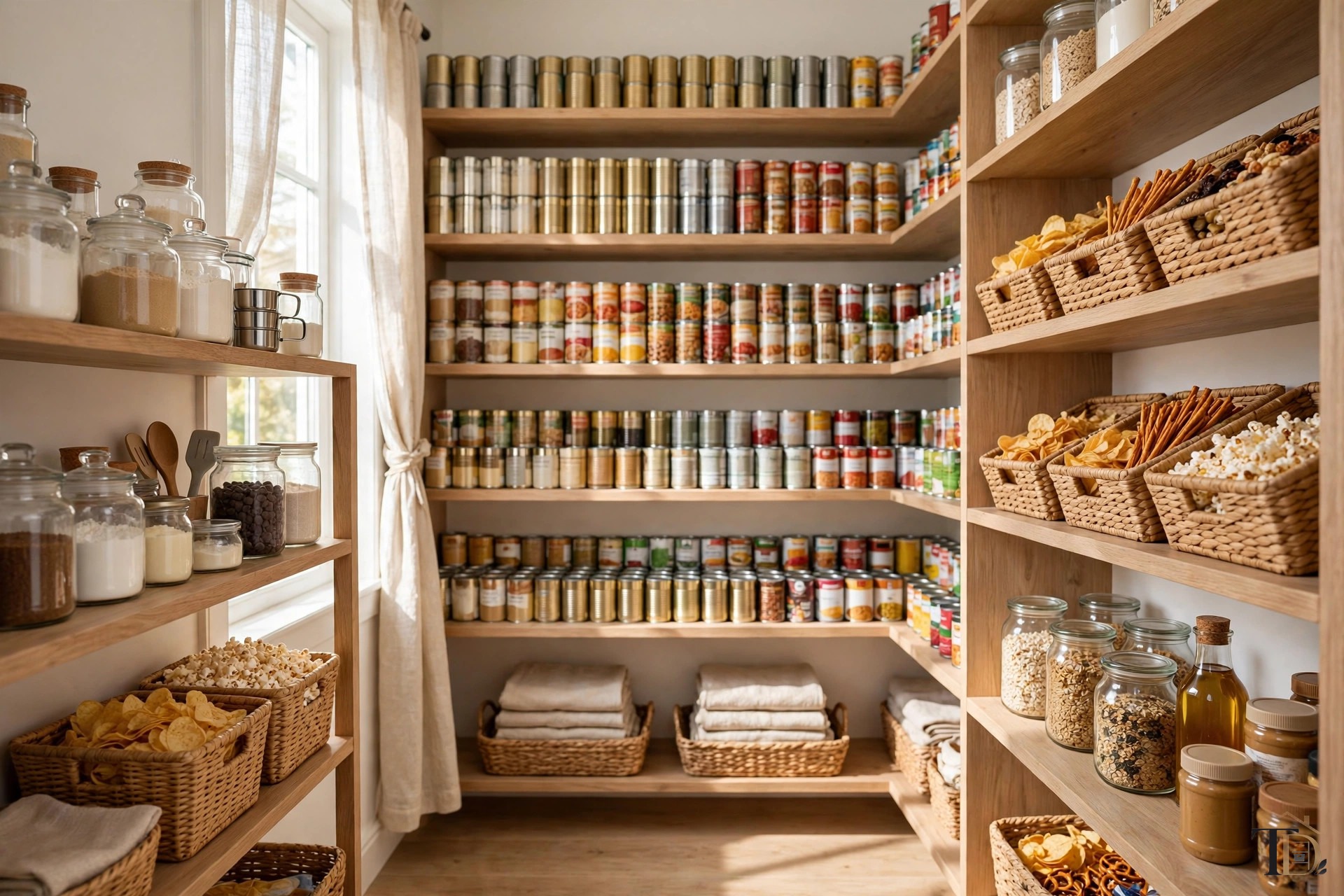
Start with how you live, not how it should look
Before anything goes back, answer one question: how does this kitchen run on a Tuesday night? Not the holiday-baking version of you — the tired, twenty-minutes-to-dinner version. That cook decides where things live.
If weeknight dinners are pasta, tacos, and sheet-pan meals, those ingredients belong front and center. If breakfast is the chaotic meal, cereal, oats, and coffee get the easy shelf. Baking supplies used twice a month can sit higher. There is no universal layout — anyone selling you one is selling a picture, not a system. That is how we approach kitchen and pantry organizing in Parker: habits first, containers last.
The zones that cover almost every pantry
Start with five zones, then adjust. Every item from your Keep pile belongs in one zone, and each zone gets one home:
- Everyday breakfast — cereal, oats, coffee, tea. Together, and low enough for whoever makes breakfast.
- Weeknight cooking — pasta, rice, canned tomatoes, beans, broth, go-to sauces. Your prime zone, at eye level, nothing hidden.
- Baking — flour, sugar, baking soda, vanilla, chocolate chips. Together, sealed, off the everyday path if baking is occasional.
- Snacks — one open bin, not five half-open bags clipped shut. When the bin is full, the pantry is full. That limit is the system working.
- Backstock — extras and bulk buys. Highest shelf or deepest corner — you only visit it to restock the front zones.
Notice what is not on that list: miscellaneous. Miscellaneous is where systems go to die. If an item fits no zone, it belongs in Relocate from Session 1 — not back on the shelf with a new label.
Prime real estate is eye level
The shelf between waist and eye level is the most valuable space in the pantry. Everyday items live there, labels facing out. Heavy items go low, where lifting is safe. Light, rarely used items go high. Kids' snacks go where kids can reach them without climbing. Most pantries are arranged by the order groceries were unpacked, not by how often anything is used. We fix the order once, on purpose.
Depth is the other enemy. On deep shelves, use a riser, a turntable, or a clear bin you can pull out like a drawer. If you have to move three things to see a fourth, that fourth thing is effectively gone — true in a small condo or when doing pantry organizing in Highlands Ranch in a walk-in twice this size.
Measure before you buy anything
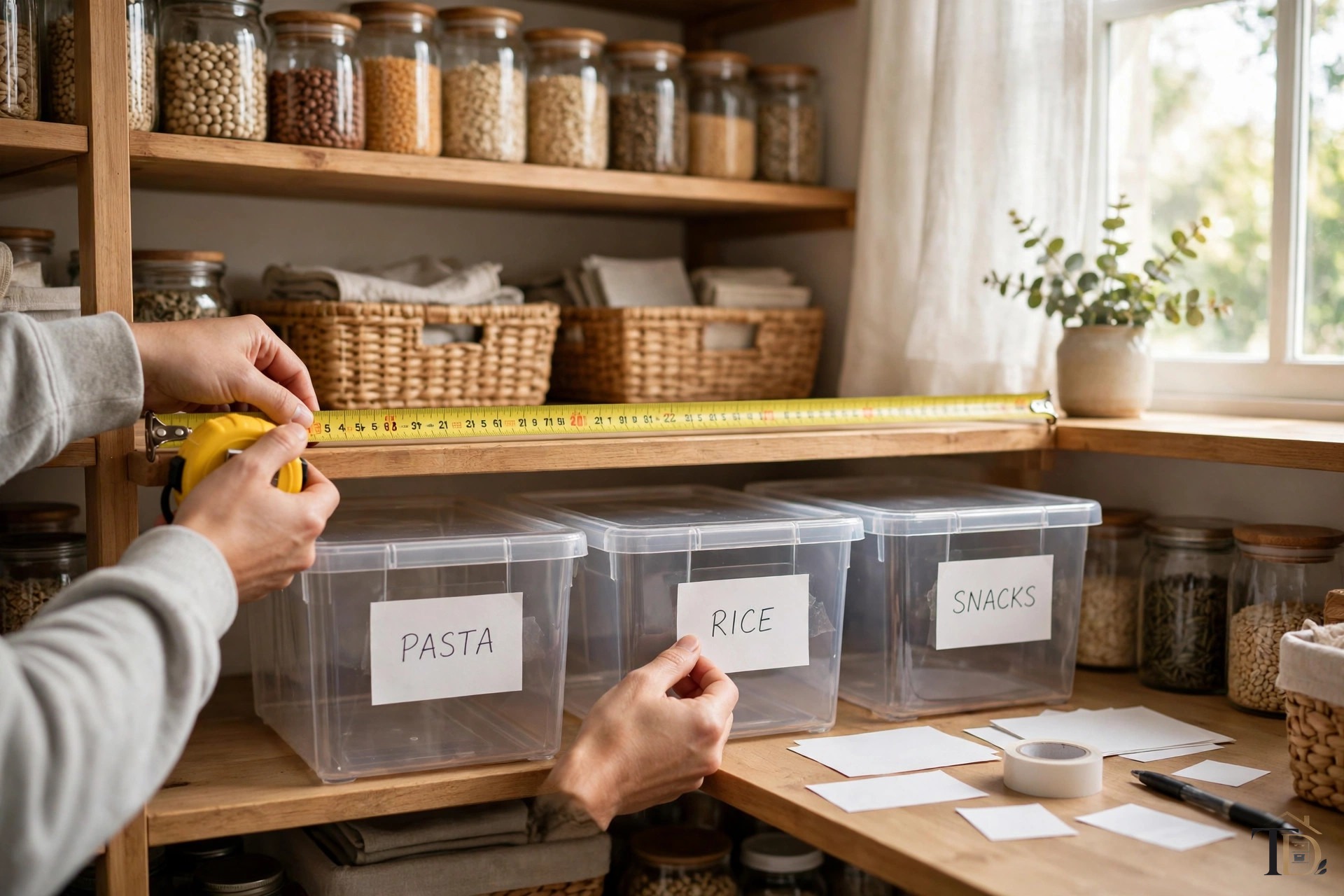
Here is where Session 2 saves you money. Measure every shelf: width, depth, and height to the shelf above. Write the numbers on your phone. Then — only then — go shopping, list in hand.
A bin an inch too tall is not storage, it is a return trip. Buy fewer, better-fitting containers, not a cart full of guesses. That is the same approach we bring to home organizing in Littleton: buy once, buy what fits.
Containers: decant what earns it
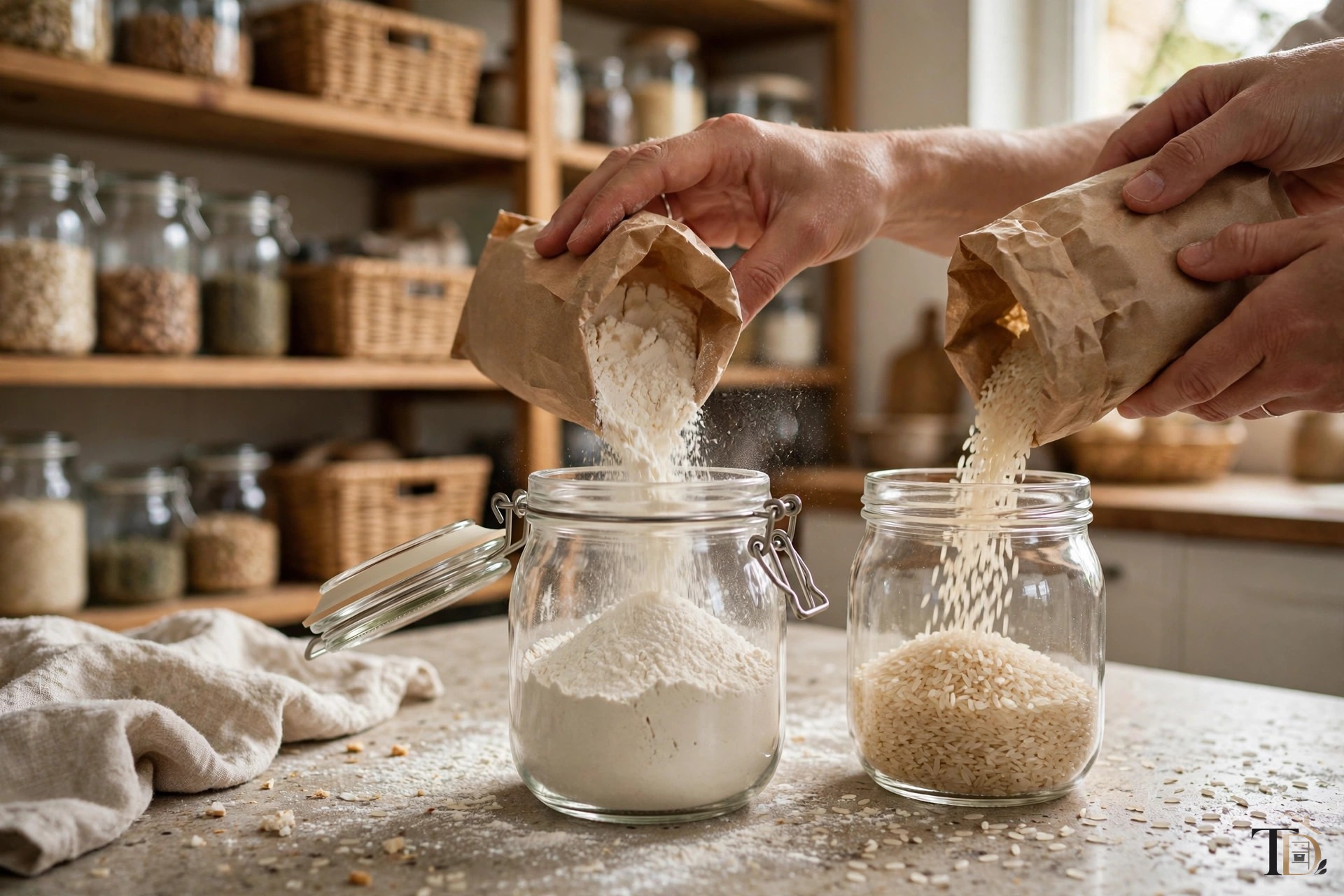
Now the part people want to skip ahead to. Decant the daily staples — flour, sugar, rice, pasta, oats, coffee — into clear, sealed containers with wide openings you can scoop from. Clear matters more than pretty: you should see the rice is low before you start dinner, not during it. Sealed ends the torn-bag, stale, spilled-shelf problem for good.
Leave the rest in its original packaging, grouped by zone. The can of beans does not need a new home, and neither does the box of crackers gone by Friday. Decanting everything is expensive and is the first thing people quit maintaining. Decant what you reach for weekly. Group the rest.
Labels that do the remembering for you
Label every container and bin in plain words: Rice. Pasta. Snacks. Not cute names or abbreviations only you understand. The label is for everyone else in the house, and for you on a tired day, so groceries go back in the right zone without a discussion. Add the date you opened a staple underneath. When in doubt, the date decides.
Then put it all back, zone by zone, and step back. Can you stand in the doorway and read the pantry? Find the five things you use most in ten seconds? If yes, you have a system. If something is hidden, move it now, while the fix is free.
Test-drive it before you call it done
Live with it for a week. Cook two or three normal meals from it. You will find one zone in the wrong place — that is normal, and swapping zones takes five minutes. What you will not have is the old chaos, because everything now has a labeled home and a limit.
In the Final Session: the reveal — finishing touches, the two-minute habits that keep it this way, and what a working pantry feels like day to day. The system you built today is what makes that reveal last — because at Temptation Designs, we take the stress out of the mess by building something you can keep up, not just photograph.
Ready to reclaim your space?
Call or text (303) 801-7142 · temptationdesigns.com — free consultations, Mon–Sun 7 AM–7 PM.
We take the stress out of the mess.
Temptation Designs serves homeowners across Denver South Metro, including Denver, Centennial, Lone Tree, and Castle Rock.