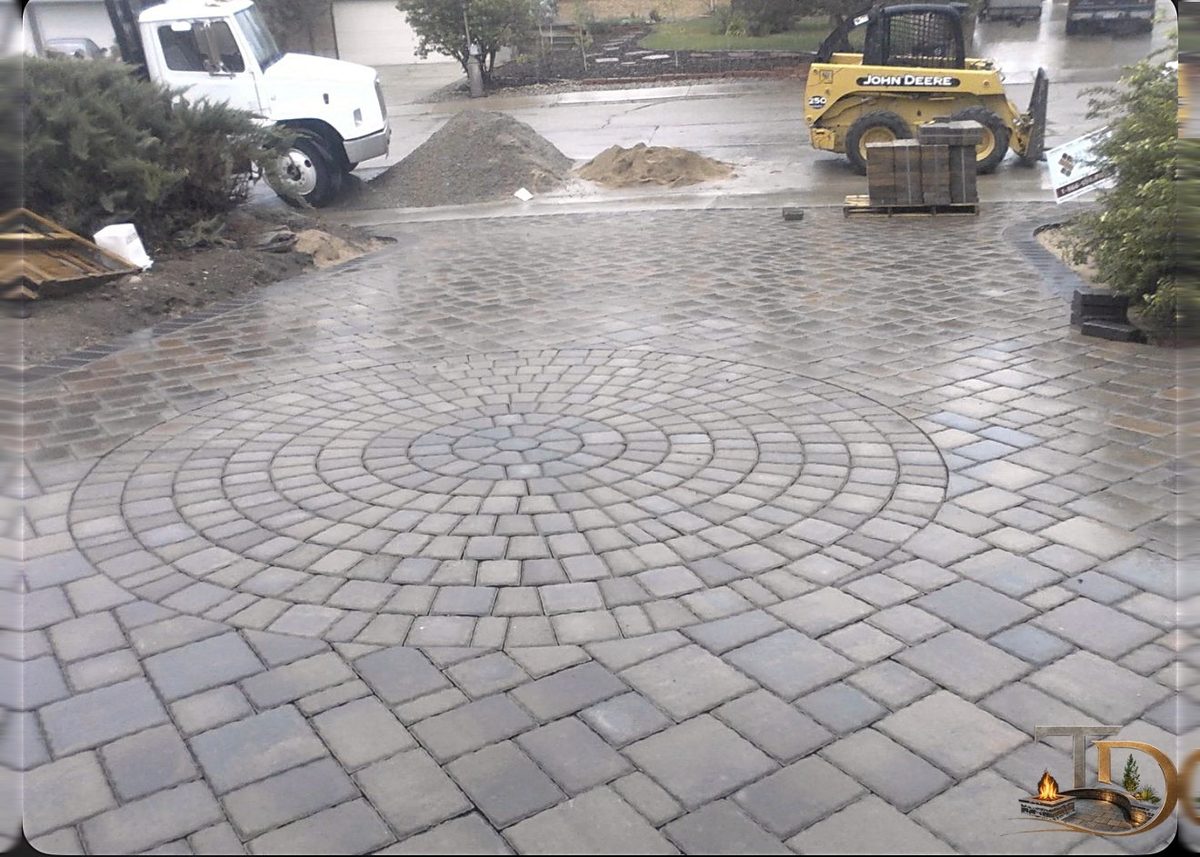
Plan Your Layout First
Every patio starts on paper, not in the dirt. Mark your shape with marking paint or a garden hose so you can walk it and feel the size. Live with it for a day before you commit.
Plan your drainage from the start: water needs to fall away from your house at about a quarter inch per foot (roughly a 2% slope). And before you dig anywhere, call 811 — it's free, it's the law in most states, and hitting a gas line will ruin your whole week.
Plan for your finished patio size, then add six inches on every side for working room and edge restraint.
Excavation: How Deep to Dig
Here's the math most DIY guides skip. You need room for 4–6 inches of compacted base, 1 inch of bedding sand, plus the paver thickness (usually about 2⅜ inches). That means digging 7–9 inches deep.
Keep your dig clean with vertical sides. If you hit soft or spongy soil, dig it out and replace it with road base — building on mush guarantees settling. Check your slope with a string line and line level as you go, because everything from here follows this grade.
The Base: The Patio Is the Base
If you remember one thing, make it this: the base is the patio. Everything else is decoration. Use ¾-inch minus road base (sometimes called crusher run). Spread it in lifts no thicker than 3 inches, and compact each lift with a plate compactor — two passes minimum — until it rings solid under your boots.
Build 4–6 inches of compacted base for a patio; driveways need 8–12 inches. Recheck slope after every lift. This is the last easy chance to fix it, and it's why our patios survive Colorado freeze-thaw without heaving.
Screeding the Sand Bed
One inch of bedding sand — no more. Use coarse concrete sand, never play sand or stone dust (they hold water and shift). Lay two 1-inch pipes as screed rails, dump sand between them, and pull a straight board across. Then pull the pipes and fill the grooves.
Do not compact this layer and do not walk on it. A flat, undisturbed sand bed is the secret to a glass-smooth surface.
Laying the Pavers
Start at your focal point — the spot every eye lands on, usually the house or the main view — and work outward, so cuts land at the edges where nobody looks. Set each paver straight down; sliding drags sand into the joints.
Keep a consistent ⅛-inch joint and step back every few rows to check your lines. Running bond is forgiving for beginners; herringbone is the strongest pattern and our signature on Denver driveways.
Cutting Pavers
Mark your cut line, score it, and snap it with a paver splitter for straight cuts. For curves and notches, rent a wet saw with a diamond blade. And wear the gear — eye and ear protection plus a dust mask. Silica dust is no joke.
Edge Restraints: The Invisible Detail
Spike plastic or metal edge restraint tight against your pavers, driven deep into the compacted base — every 6–8 inches, closer on curves. Skip this and your border pavers will migrate outward within a season or two.
Polymeric Sand: Lock It All In
Make sure the pavers are bone dry, then sweep polymeric sand over the whole patio, working it into every joint. Run the plate compactor over the pavers with a pad attachment — this settles the pavers and vibrates sand deep into the joints. Top off low joints, then mist lightly to activate the polymers and keep everyone off until fully dry. Result: no weeds, no ants.
Final Walkthrough
Walk the patio like a customer. Check for lippage (one paver higher than its neighbor), test drainage with a hose, and inspect every joint. This inspection is part of every Temptation Designs final build — it's what separates a pro job from a weekend job.
Sealing and Maintenance
Sealer is optional but deepens color, resists stains, and makes cleanup easier. Wait at least 30 days so efflorescence can surface and be cleaned first. For maintenance: sweep regularly, pull weeds early, and re-sand joints as needed. A well-built paver patio lasts decades.
Common questions
How deep should I dig for a paver patio?
Dig 7–9 inches deep: 4–6 inches for compacted road base, 1 inch for bedding sand, plus the paver thickness (about 2⅜ inches).
What is the best base for pavers?
¾-inch minus road base (crusher run), compacted in lifts no thicker than 3 inches with a plate compactor.
Can I lay pavers on dirt?
No. Pavers laid directly on dirt will settle unevenly within a season or two. A compacted aggregate base is non-negotiable.
How much slope does a paver patio need?
About a quarter inch of fall per foot (2% grade) away from your house for proper drainage.