Final Session: The Reveal
Final Session of The Pantry Rescue: the finishing touches that make the system feel finished, the small habits that keep it that way, and what a working pantry actually feels like on a Tuesday.
In Session 1, everything came out and the five piles told the truth. In Session 2, the Keep pile got zones, measured containers, and labels. So what is left? The part that decides whether all that work still holds in three months. This final session is not a photo shoot. It is the finishing pass, the test drive, and the handful of small habits that keep a pantry working long after the reveal day is over.
Here is the straight version: a reveal is not when the pantry looks its best. It is when it works its best — on a tired weeknight, on grocery day, and on the morning everybody is running late at once.
The finishing touches that actually matter
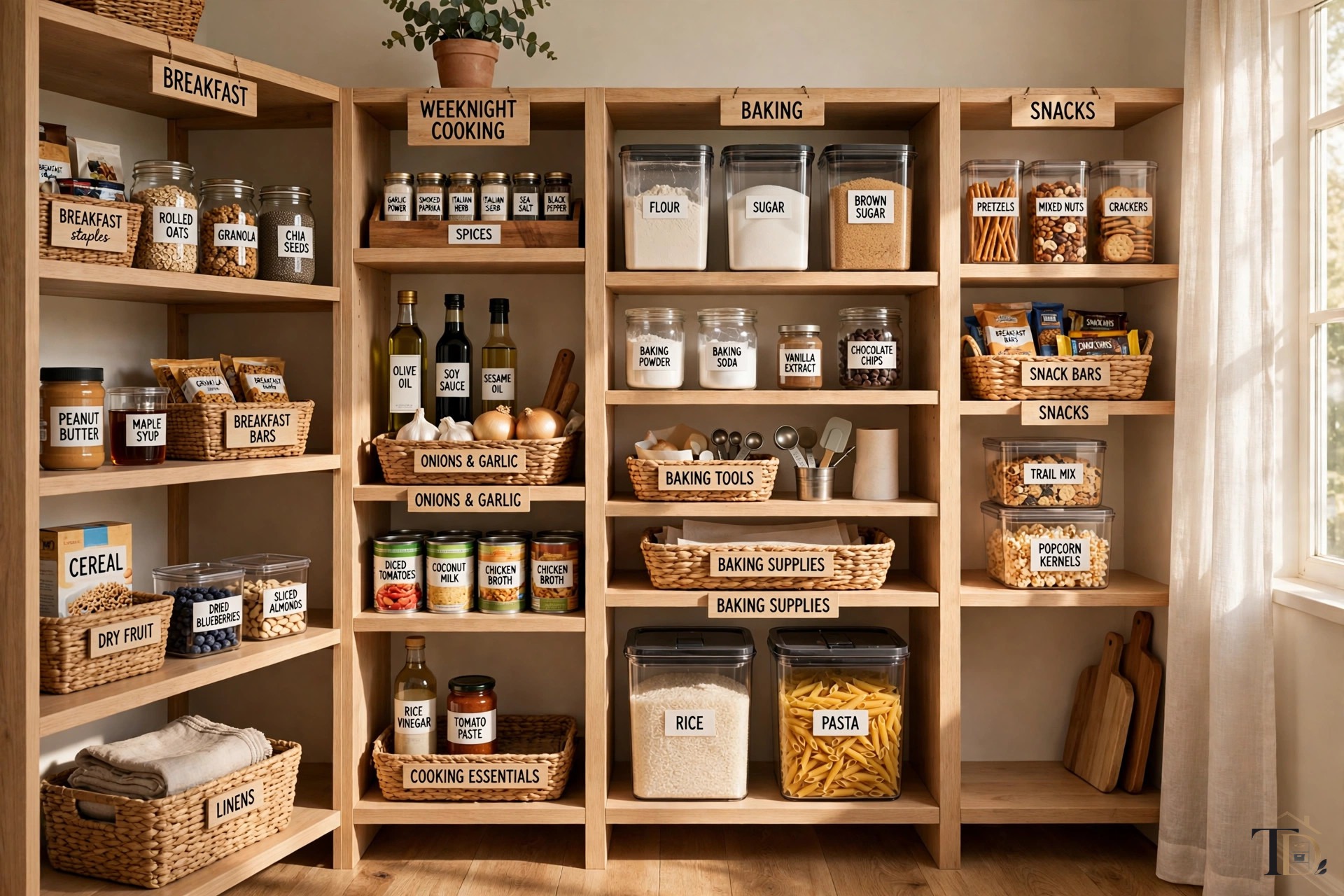
We start with a slow walk-through, shelf by shelf, looking for friction. A container that is hard to open gets swapped. A label nobody can read from standing height gets rewritten, bigger and plainer. The heavy flour bin sitting a little too high comes down. These are five-minute fixes, and they matter more than any decorative touch, because friction is what makes people stop putting things back.
Then we line everything up with labels facing out and one finger of breathing room in each zone. That empty space is deliberate. A pantry packed edge to edge has nowhere for groceries to land, so they land wherever — and that is how the old clutter started. Leave room to grow by exactly one grocery run, no more. That is the finishing standard we use for pantry organizing in Englewood: finished means usable, not stuffed.
The doorway test
Now step into the doorway and set a timer in your head. Ten seconds. Can you find the five things you reach for most? Can you see what you are low on without moving a single item? Can a guest, a teenager, or a tired partner put groceries away correctly without asking you a question?
If the answer is yes three times, the system is done. If something fails, fix that one spot now, while it is still a five-minute job. A reveal that cannot pass the doorway test is just a tidy shelf. A reveal that passes it is a system the whole house can run — which is the whole point of kitchen and pantry organizing in Greenwood Village and everywhere else we work.

What the after feels like, day to day
Morning is faster. Coffee, oats, and cereal sit together, so breakfast happens without opening four doors. Dinner is calmer, because you can see the pasta, the sauce, and the beans in one glance and know — actually know — you have what the recipe needs. Grocery day stops being a guessing game: your shopping list comes from the empty spaces and the low containers, not from memory, so the duplicate buys that filled the old pantry simply stop happening.
That calm is the real after. It is not a shelf you are afraid to touch. It is a room that answers questions quickly and stays out of your way.
The small habits that keep it that way
No system survives on good intentions. It survives on habits small enough that you will actually do them:
- The two-minute reset — while dinner cooks or coffee brews, put strays back in their zones and turn labels out. Two minutes, most days, beats a two-hour rescue twice a year.
- One in, one out — a new item earns its place by fitting the zone. If the snack bin is full, something finishes or goes before the new bag opens.
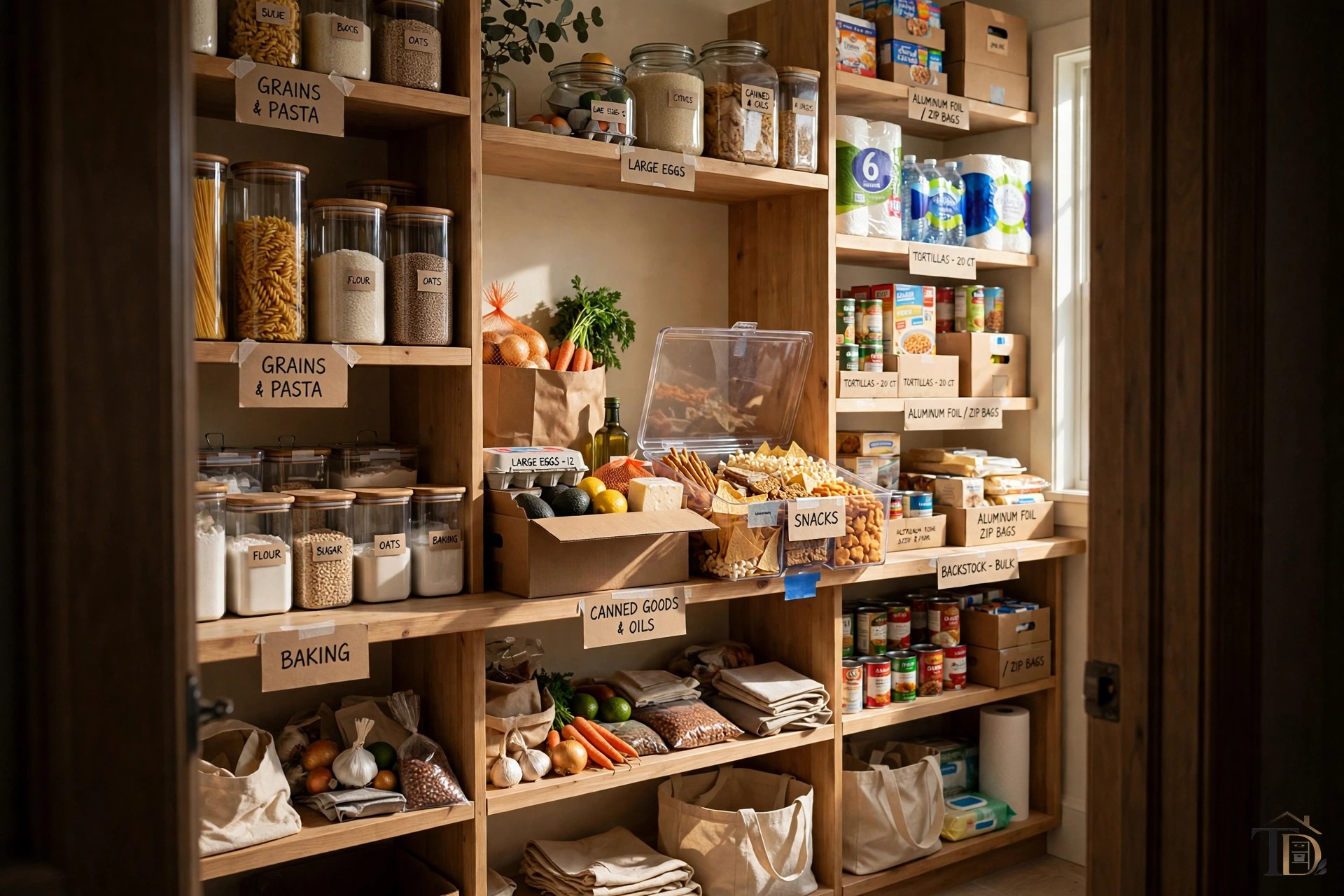
- Shop your backstock first — before any grocery run, check the backstock shelf and move extras forward. The front zones get restocked from your own pantry first.
- The monthly ten-minute sweep — once a month, scan dates, wipe one shelf, and move anything close to expiring to the front. Ten minutes, on the calendar, done.
Notice none of these ask for perfection. A zone that drifts a little gets corrected by the reset. That is the design: small corrections, often, instead of one big failure later.
When to call for a reset
Life changes, and a good system should change with it. Book a reset when the household changes — a new baby, a new diet, kids suddenly eating like teenagers — or when two zones have quietly merged into one miscellaneous shelf again. Holiday bulk buying, a warehouse-store habit that outgrew the backstock shelf, or containers that no longer match what you cook are all fair reasons too. A reset is a short session, not a failure. It is the same thinking we bring to home organizing in Cherry Creek: adjust the system to the life you are living now.
That closes The Pantry Rescue: sort honestly, build around how you cook, finish it so the whole house can keep it up. Next series, we take the same three sessions into the garage. Until then, run the doorway test on your own pantry tonight. If it fails, you know where to start — and at Temptation Designs, we take the stress out of the mess.
Ready to reclaim your space?
Call or text (303) 801-7142 · temptationdesigns.com — free consultations, Mon–Sun 7 AM–7 PM.
We take the stress out of the mess.
Temptation Designs serves homeowners across Denver South Metro, including Elizabeth, Franktown, Castle Pines, and Centennial.
Get the Next Reclaim in Your Inbox
New organizing posts, real before-and-afters, and seasonal declutter checklists from Temptation Designs. One or two emails a month — no spam, ever.
We’ll email you once to confirm — that keeps the list clean. Unsubscribe anytime.